Eco Retreat • Finca Ecologicaz • Seminar Space • La Gomera
Nature Accommodation & Eco Retreat on La Gomera
We live and work on a former potato finca in the green north of La Gomera, above the village of Tamargada, in a high valley at 600 metres above sea level. Surrounded by trees, plants, shrubs and animals, this place has become a quiet nature accommodation for people seeking a peaceful stay away from mass tourism on the Canary Islands.
The finca once consisted of seven small houses where the workers’ families lived. Today, their overgrown and decaying stone ruins are scattered across the land, shaping the landscape together with natural stone walls up to six metres high that once defined the terraced fields. Until the 1980s, access was only possible via donkey paths. Later, a winding road was built, connecting the finca to Las Rosas.
The last potato harvest was collected in 1995. Since then, agricultural activity has stopped, and for nearly 30 years nature has slowly reclaimed the land. During this time, the soil has been able to regenerate and recover naturally — a foundation for our sustainable, off-grid accommodation and eco retreat concept.
Set in a stunning, partly terraced location with views of the surrounding hills and the Atlantic Ocean, lush greenery grows year-round. Tree heather, bay laurel, pine, chestnut, rose apple, palm trees, mulberry, fig, orange and apple trees thrive alongside nispero, Cape gooseberry (physalis), rosemary, peppermint, oregano and nasturtium. Bougainvillea, roses, camellia, calla lilies, hydrangeas, hibiscus, oleander, geraniums, shrubs, lilies and many other flowering plants continue to be added. Some trees are still young and will take time to bear fruit — a process we enjoy observing as part of living close to nature.
We practice organic and chemical-free cultivation, using only natural fertilizers such as donkey manure, coffee grounds and fermented liquid from Bokashi buckets with effective microorganisms. No chemical pesticides or artificial fertilizers are used anywhere on the property.
While walking through the grounds, you may encounter cats, chickens or rabbits roaming freely. Frogs and a rich variety of birds also live here, including buzzards, sparrows, laurel pigeons, Bolle’s laurel pigeon, blackbirds, monk parakeets, Canary chiffchaffs, chaffinches, woodcocks and kestrels — making this place a small sanctuary for wildlife and slow living.
Our off-grid eco accommodation is powered entirely by solar energy. Cooking and hot water for showers are provided by gas, allowing for a simple, sustainable lifestyle in harmony with the environment. There is no Wi-Fi, no television — just space for digital detox, silence and reconnection with nature.

La Gomera
is located in the Atlantic Ocean, about 11 million years old and belongs to the group of Canary Islands (Spain)
The Canaries are the solar islands of Spain off the west coast of Africa.
It is, with 370 square kilometres to El Hierro, the second smallest island in the Canary Islands and has about 20,000 inhabitants.
The Spanish mainland is 1.300km away, the African continent is 300km.
Like all islands in the Canary Islands, La Gomera is of volcanic origin and consists mostly of cold lava, tuff and basalt rocks.
Wind and water have created Barranco (notched valleys) and Valles (trough valleys) over time. The last volcanic eruption is about 2 million years ago.
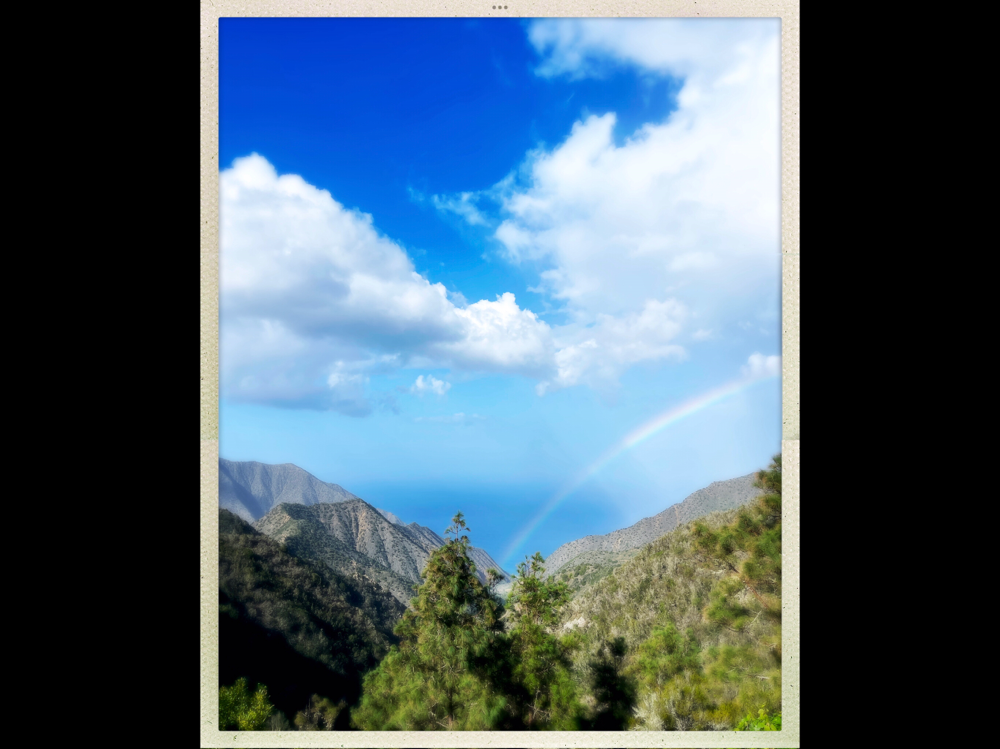
Why the North and not the South?!
Mild in winter, not too hot in summer and a temperate climate all year round. La Gomera, as in all the Canary Islands, has a very mild climate all year round.
This is caused by the north-east passat and a branch of the Canary river, which ensures almost even temperatures throughout the year (15-22 degrees).
However, the climate zones on the island have to be taken into account.
It may well be that it is cloudy and rainy in the north and at the same time the sun shines in the south with a bright blue sky. From December to March, it can be really fresh and cool for Canary conditions. Never below freezing but around 8 degrees already, sometimes accompanied by rain and wind. During this time, we heat the ovens and make ourselves comfortable in front of it.
Already on our first trip we agreed that air, temperature and vegetation in the north, we liked and enjoyed much better than the comparatively dry heat and barren landscape in the south, but this is of course a matter of taste.
By car you are there in about an hour.
Since we have also come to the island to grow fruits, vegetables and plants, a humid, wooded and more rainy environment was exact what we where looking for.
Getting there / Mobility / Food
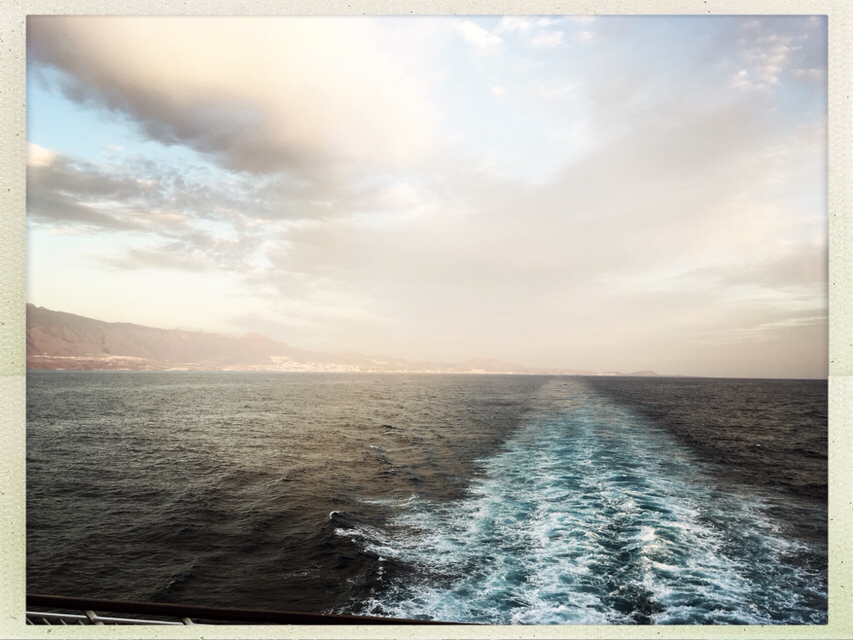
La Gomera is not directly accessible from mainland Europe. The journey takes place from Tenerife South Reina Sofia Airport (TFS) and from there by ferry (Fred Olsen or Naviera Armas), which run several times a day between the islands, from the port of Los Christianos Tenerife South to San Sebastian de La Gomera.
You can get to the port either by bus (Titsa terminal at the airport) or by taxi and the journey time is about 25 minutes.
The last ferry leaves at 19:00 (without guarantee, Season check: directferries for the time schedule & prices), so we recommend to book your flight, that you have enough time (1 1/2 - 2 hours) to reach the last ferry at the latest.
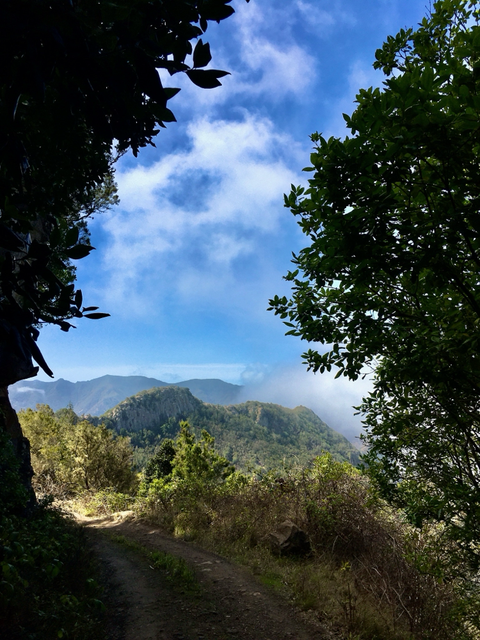
If you want to spend a relaxing holiday on the island and want to be mobile, you should rent a car with which you can easily explore and discover the island.
The house is accessed from the main road via a private and hiking trail along rocks and through the forest. Since this road is partly uneven and Off-Grid, it is not advisable to use a normal car to drive down the slope to the house (1.6 km).
The car can be parked at the top of the road and we will pick you up and bring you up, of course. (Which does not mean that we drive you up or bring you down all the time, except arrival and departure. We are an Eco Retreat and very appreciate guests which like to walk and enjoy themselves feel and become more into live day by day of their stay.
Sounds adventurous, and so is.
Since we live totally Off-Grid, we recommend, renting a car (Groceries, Sightseeing, Independency)
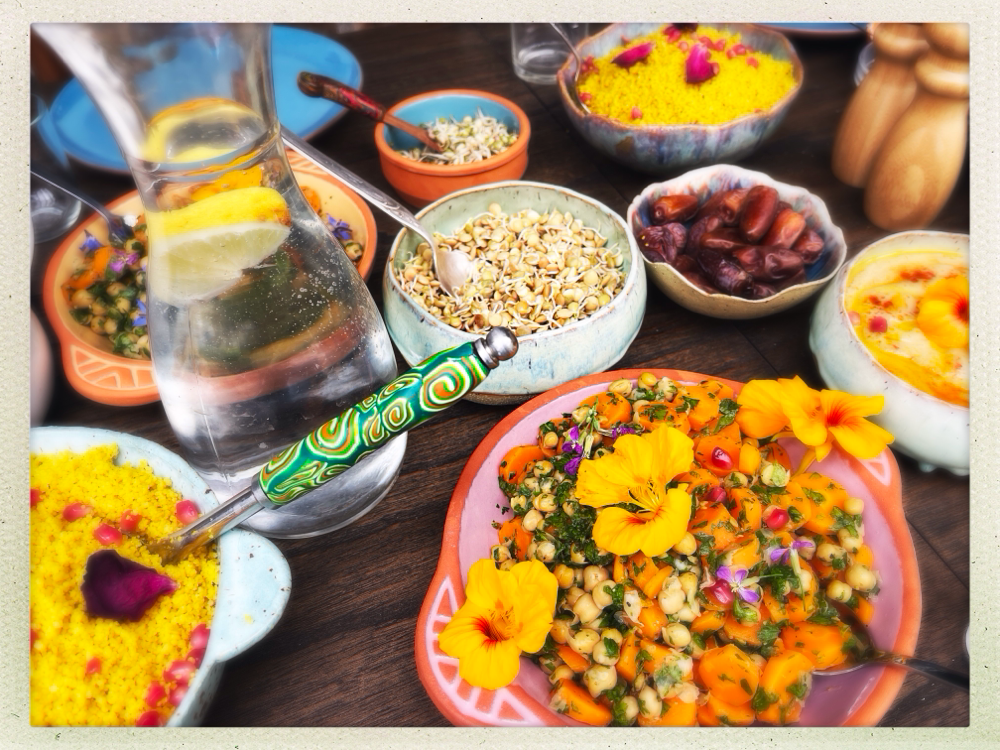
We use the fruits and vegetables that grow in our garden; everything else comes from local organic farmers and shops. Our chickens gift us plenty of eggs, and we bake our own sourdough bread. Ingredients for spreads like green pesto and guacamole come straight from the garden. And when we feel like having fresh fish, we try to catch some ourselves.